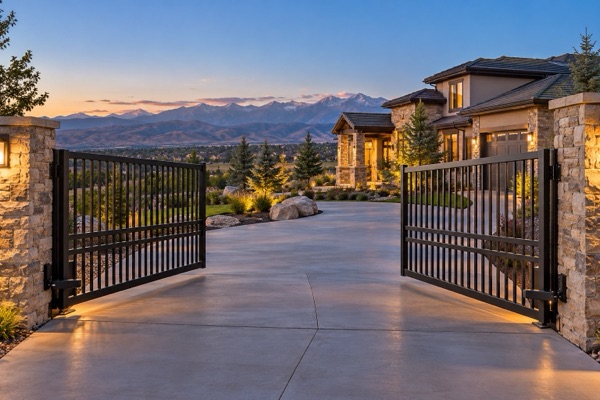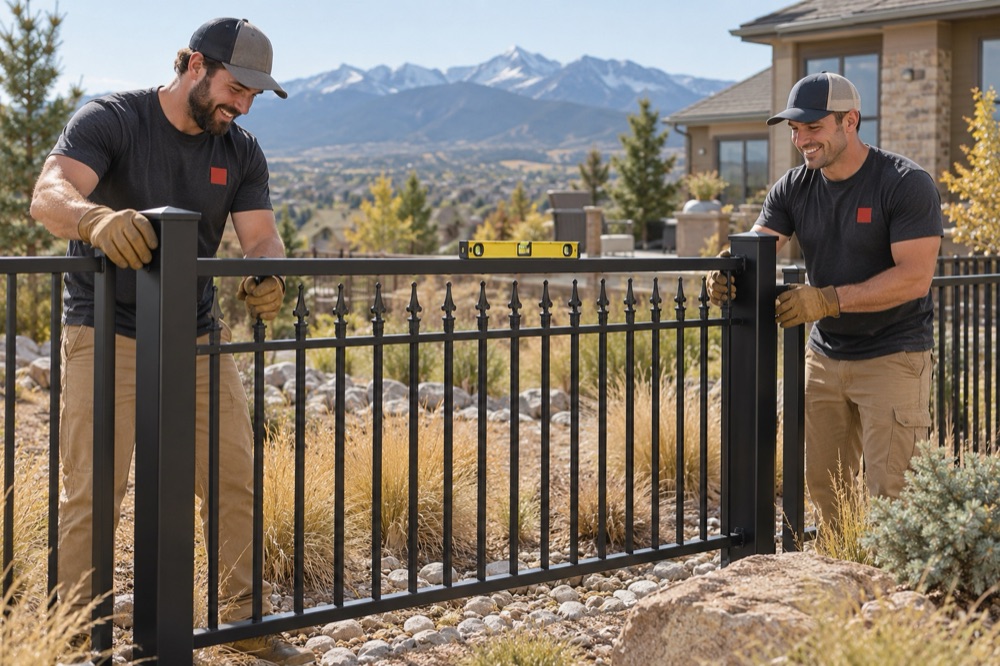
What people mean by "wrought iron"
True wrought iron has not been produced commercially in the US for decades. When someone asks for a wrought iron fence today, they mean the look: black vertical pickets, a top rail, maybe spear points or rings. Behind that look is either tubular steel or solid steel bar.
Tubular steel is what most residential fences in Westminster are made of. The pickets and rails are hollow steel, galvanized at the mill, then powder coated. Panels come in standard widths and heights, which keeps the price sensible and makes later repairs easy, because a matching panel can be ordered.
Solid bar is what we use for custom gates, scrollwork and fences that need to match an older railing. It is heavier and costs more. It also takes more care, because bare solid steel rusts quickly wherever its paint gets chipped.
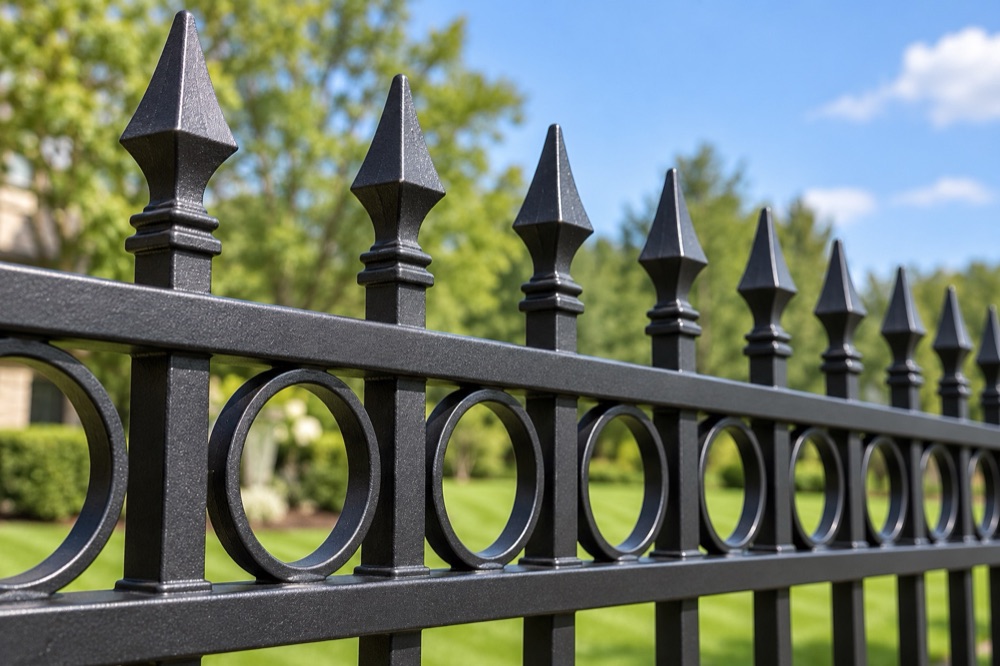 Spear points and ring accents
Styles that suit Westminster houses
Flat-top or pressed-point picket. Clean, plain and a good match for the 1980s and 1990s two-story houses that fill much of north and west Westminster. Most HOAs accept it.
Spear-top. The traditional look, common on front yards and around older brick ranches. Spears are decorative, not a security feature, and some HOAs ban them near sidewalks.
Double top rail with rings or butterflies. More ornament between the rails. It looks best on short front fences where people see it up close.
Puppy pickets. Extra short pickets between the main ones along the bottom, so a small dog cannot squeeze through a 4-inch gap.
Built to the height limits
Westminster Municipal Code 11-4-6(P) puts ornamental iron in its own class (Class 2). In front of the front building line, most fences stop at 36 inches. An ornamental iron fence that is more than 50 percent open can go to 42 inches, and post caps are not counted. Side and rear yard fences can be six feet. Panels are sold in those heights, so a front fence that matches the backyard fence is easy to order.
Over 30 inches tall, Westminster requires a building permit. The city's eTRAKiT portal is paperless, and we prepare the site plan that goes with the application. The permit list and code section are linked if you want to read them yourself.
Posts and footings
A steel fence is only as straight as its posts. We use heavier posts at corners, ends and every gate, set in augered holes with concrete, plumb in both directions. The concrete is crowned at the top so water runs away from the post instead of pooling against it.
Westminster's clay soils swell when wet and shrink as they dry. A shallow footing in that soil moves a little every year, and on a fence it shows up as a leaning line or a gate that no longer latches. Deeper footings and keeping sprinkler spray off the fence line both help.
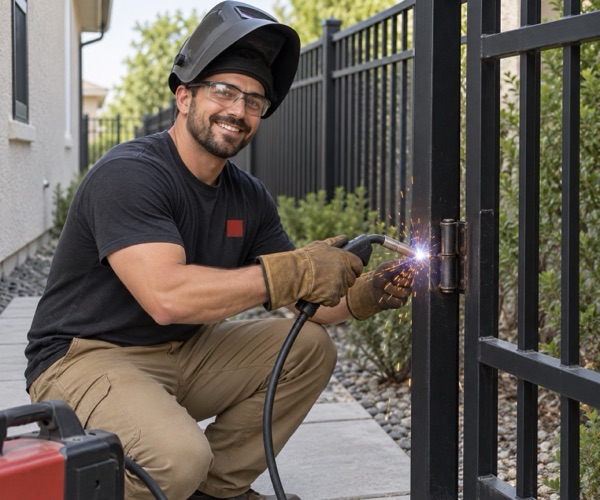
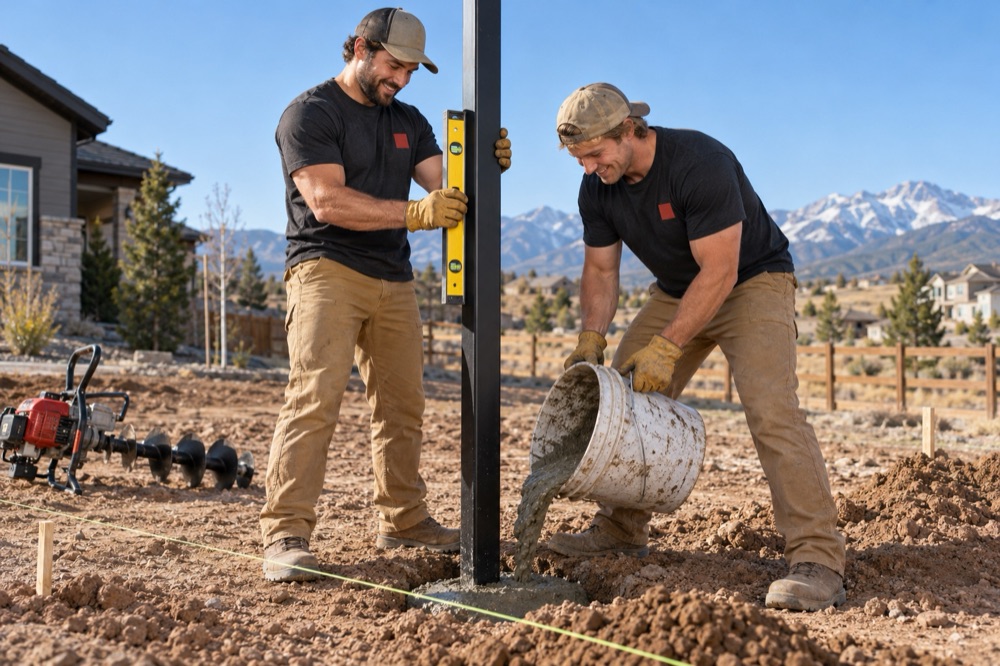 Gate post, plumbed and poured
Slopes, steps and racking
Many Westminster lots slope toward the street or toward a drainage way behind the house. Standard steel panels can be racked, meaning the pickets stay vertical while the rails tilt to follow a gentle grade. Steeper grades get stepped panels, with each panel level and a step at each post. Stepping leaves triangular gaps under the low side, so on a dog fence we fill those gaps or use puppy pickets.
Finish and upkeep
Powder coat holds up well in Colorado's dry air and strong sun. What damages it is impact: hail, string trimmers, a shovel. Once a chip reaches bare steel it will rust, and rust spreads under the coating from there. Walk the fence each spring, clean any chip with a wire brush and dab on touch-up paint. We leave a can of the matching color with every steel job.
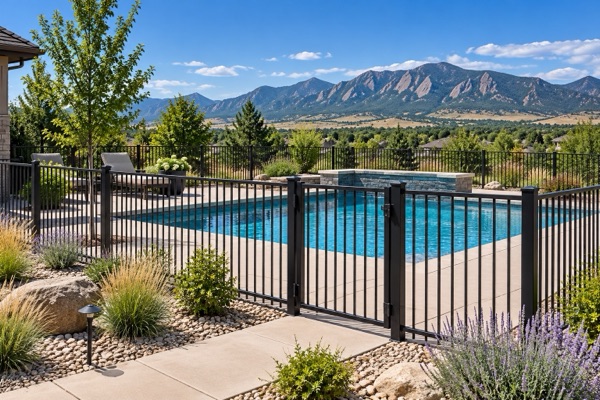
Aluminum avoids that whole question. If your fence will sit in sprinkler spray or near a pool, see aluminum and pool fencing.